
कोर्ट मैरिज / लव मैरिज: प्रक्रिया, दस्तावेज़ और समय (विशेष विवाह अधिनियम)
At a glance
- Law
- Special Marriage Act, 1954
- Who
- Groom 21+, bride 18+, neither with a living spouse
- Where
- Marriage Officer of the district (District Sub-Registrar)
- Time
- Ordinarily 35–45 days from notice
What it is
A civil marriage solemnised before a Marriage Officer appointed by the Government. It needs no religious ceremony and no change of religion, so it suits inter-caste and inter-faith couples, and also couples who simply prefer a civil marriage.
Who can apply (Section 4)
- The bridegroom has completed 21 years and the bride 18 years.
- Neither party has a living spouse.
- Both parties are of sound mind and capable of giving valid consent.
- The parties are not within the degrees of prohibited relationship, unless a custom governing at least one of them permits the marriage.
Step-by-step process
- 1
Notice of intended marriageSection 5
Both parties sign a notice in the prescribed form and give it to the Marriage Officer of the district where at least one of them has lived for 30 days or more immediately before the notice. In Bihar, the District Sub-Registrar ordinarily acts as Marriage Officer.
- 2
PublicationSection 6
The Marriage Officer enters the notice in the Marriage Notice Book and displays it in the office. If either party lives in another district, a copy is sent to that district for display.
- 3
Objection periodSection 7
For 30 days from publication, any person may object on the ground that a condition of Section 4 is not met. Where an objection is made, the Marriage Officer inquires into it, and an appeal against the decision lies to the District Court.
- 4
DeclarationSection 11
After 30 days, if there is no objection or the objection has been decided, both parties and three witnesses sign a declaration in the prescribed form before the Marriage Officer.
- 5
SolemnisationSection 12
The marriage is solemnised at the Marriage Officer's office (or another place within reasonable distance, on payment of additional fee). Each party says to the other, in the presence of the Marriage Officer and witnesses, words to the effect: “I, (A), take thee, (B), to be my lawful wife / husband.”
- 6
Marriage CertificateSection 13
The Marriage Officer enters the certificate in the Marriage Certificate Book. It is signed by both parties and the three witnesses, and is conclusive evidence of the marriage.
Documents required
Checklist · 8 items- Notice of intended marriage, signed by both parties
- Proof of age of each party: matriculation certificate, birth certificate or passport
- Proof of residence for the last 30 days: Aadhaar, voter ID, rent agreement, or a residence certificate
- Identity proof and recent passport-size photographs of both parties
- Affidavit of each party stating date of birth, present marital status, and that the parties are not within prohibited degrees
- If previously married: divorce decree, or death certificate of the former spouse
- Three witnesses with their identity and address proof
- For a foreign national: passport, valid visa, and a single-status / no-objection certificate from the embassy
Time usually taken
35 to 45 days from notice to certificate
At least 30 days from the date of notice because of the mandatory objection period. Ordinarily 35 to 45 days from notice to certificate. The marriage must be solemnised within three calendar months of the notice; otherwise a fresh notice is required.
Points to remember
- 01Neither party needs to change religion.
- 02Couples already married by religious rites may separately apply for registration of that marriage under Section 15 of the same Act.
- 03Adults who marry by choice are entitled to protection of law. The Supreme Court in Lata Singh v. State of U.P. (2006) 5 SCC 475 and Shakti Vahini v. Union of India (2018) 7 SCC 192 directed the police and administration to protect such couples from threats and harassment.
- 04Inheritance after a Special Marriage Act marriage follows the Indian Succession Act, except where both parties are Hindus (Section 21A).
Frequently asked questions
How many days does a court marriage take in Bihar?
At least 30 days from the date of notice, because of the mandatory objection period. Ordinarily 35 to 45 days from notice to certificate. The marriage must be solemnised within three calendar months of the notice; otherwise a fresh notice is required.
Does either party have to change religion for an inter-faith court marriage?
No. A marriage under the Special Marriage Act needs no religious ceremony and no change of religion by either party.
How many witnesses are needed for a court marriage?
Three witnesses, with their identity and address proof. They sign the declaration and the Marriage Certificate Book along with both parties.
In which district is the notice of court marriage given?
In the district where at least one of the parties has lived for 30 days or more immediately before the notice. In Bihar, the District Sub-Registrar ordinarily acts as Marriage Officer.
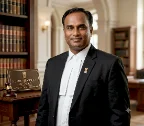
About the author
Advocate Vivekanand
Founder & Principal Advocate, Vivekanand Law Firm · MA (English), MBA, LL.B., Author. Full profile
Disclaimer. This publication is for general legal information and education only. It is not legal advice on any particular matter and does not create an advocate-client relationship. Procedures, fees and time limits change from time to time and may differ from office to office; verify the current position before acting.
यह प्रकाशन केवल सामान्य कानूनी जानकारी और शिक्षण के लिए है; यह किसी विशेष मामले में कानूनी सलाह नहीं है, और इससे अधिवक्ता-मुवक्किल संबंध नहीं बनता।
— Adv. Vivekanand, Motihari
Related practice
Matrimonial and Family Disputes